How Educational Institutes Can Use Accessible Digital Flipbooks in 2026.
Learn how educational institutes can use accessible digital flipbooks for course materials, prospectuses, and student handbooks - with WCAG 2.2 AA compliance built in on every ZenFlip plan.
Written By: Jagadish CU (Founder Of Zentrovia Solutions)
Accessible Digital Flipbooks in Education
Educational institutes produce more published content than almost any other type of organisation - course materials, syllabi, student handbooks, admissions brochures, research publications, campus guides, and newsletters. In 2026, the format that content is delivered in matters as much as the content itself. Accessible digital flipbooks for education can give schools, colleges, and universities a way to publish materials that every student, regardless of ability or device, can actually engage with.
This guide covers where accessible flipbooks fit into the educational publishing workflow, what accessibility compliance means in a learning context, and how platforms like ZenFlip make inclusive digital publishing the default rather than an upgrade.
Why Accessibility Is Non-Negotiable in Educational Publishing
In many jurisdictions, educational institutions have a legal and ethical responsibility to make their published materials accessible to all students. WCAG 2.2 AA - the Web Content Accessibility Guidelines current standard - sets out the technical requirements for digital content to be perceivable, operable, understandable, and robust for readers using assistive technologies.
In an educational setting, this matters practically. Students using screen readers, students with dyslexia who benefit from adjusted typography, students who prefer audio-first content consumption, and students on older or lower-specification devices all depend on their institution's published materials working for them - not just for the majority.
A static PDF sent by email or posted to a virtual learning environment does not meet these requirements by default. A WCAG compliant educational material published as an interactive digital flipbook can meet them - provided the platform and the underlying document structure support the standard.
Five Ways Educational Institutes Can Use Accessible Digital Flipbooks in 2026
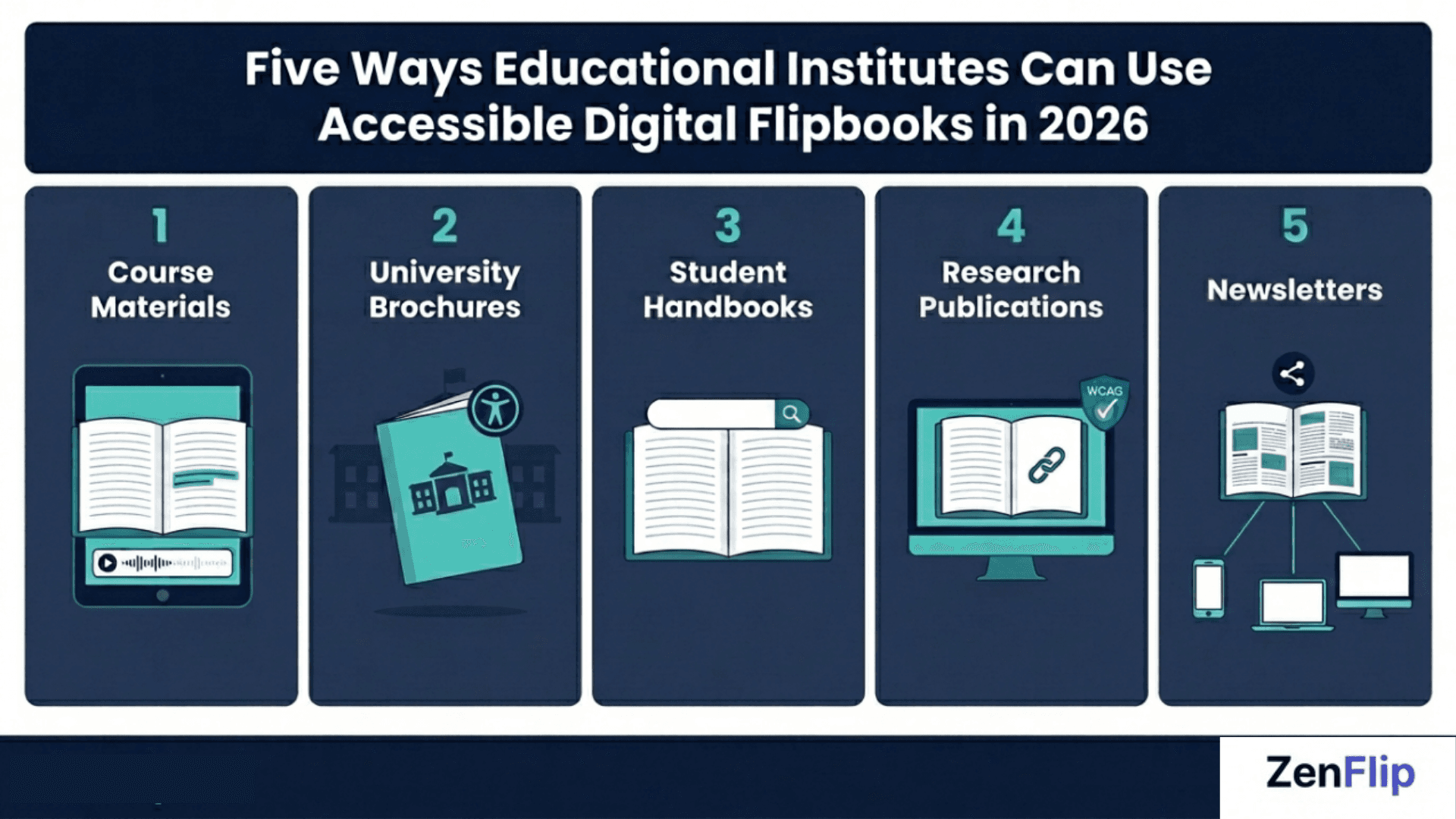
Course Materials and Syllabi
Course materials are among the most frequently accessed documents a student encounters across an academic year. Publishing course packs and syllabi as accessible digital flipbooks can make them mobile-responsive, searchable, and navigable by screen reader - giving students access from any device without requiring a download.
Text-to-speech with word highlighting can allow students who process information more effectively through audio to listen to their course materials as they follow along. This can be particularly valuable for students with dyslexia or reading differences who may find dense course packs difficult to engage with in a traditional PDF format.
University Prospectuses and Admissions Brochures
A prospectus is often the first extended piece of content a prospective student reads about an institution - and the format it is delivered in can communicate something about the institution's values before a single word is read. Publishing a prospectus as an accessible digital flipbook can make it work for every prospective student who visits it - including those using assistive technology, those on mobile devices, and those with reading differences.
For institutions looking to signal inclusive values through their content delivery, an accessible admissions brochure is a practical and visible starting point.
Student Handbooks and Campus Guides
Student handbooks are reference documents that students return to throughout the year. Publishing them as interactive flipbooks can make them searchable and browsable in ways that PDF documents are not. Full-text search can allow a student to find the specific policy or contact they need without scrolling through a lengthy document - reducing friction and improving the practical usefulness of the document.
Research Publications and Reports
Academic departments and research centres can use the interactive flipbook format to make long research documents more readable on screen. Embedded links can allow readers to navigate to cited sources directly. Publishing research as a WCAG compliant digital flipbook can also extend its reach to academic audiences who rely on assistive technologies - an audience that a standard PDF may not serve well.
Newsletters and Internal Communications
Institutional newsletters and internal communications can benefit from the flipbook format by becoming shareable via a direct link, embeddable on a website or intranet, and accessible to all staff and students regardless of device or ability. Publishing institutional communications this way can replace attachment-heavy email workflows with a cleaner, more accessible alternative.
What Makes a Digital Flipbook Truly Accessible for Education
For educational publishing, accessible flipbook software in 2026 needs to do more than convert a PDF to a page-turn format. It needs to provide the full range of features that different students depend on.
Text-to-speech with word highlighting can serve students who benefit from audio support. Screen reader compatibility - built on clean, text-accessible document structure - can serve students using assistive navigation technology. Dyslexia-friendly reading modes can serve students with reading differences. Mobile responsiveness can serve students accessing materials on phones or tablets rather than desktop computers. A mobile-responsive, device-agnostic output can help ensure that the digital divide between students with different hardware does not become a learning divide.
Inclusive digital textbooks and course materials built on these foundations do not just benefit students with disabilities - they can benefit every student whose preferred reading environment is different from the majority, which can represent a significant portion of any student body.
How ZenFlip Supports Educational Publishing
ZenFlip is the only digital flipbook platform that includes WCAG 2.2 AA accessibility compliance across every plan - including the free tier - with no configuration required. Every publication created on ZenFlip automatically includes text-to-speech with word highlighting, screen reader support, Microsoft ImmersiveReader integration, dyslexia support, and mobile-responsive output on all devices.
For educational institutions with limited budgets, ZenFlip's free plan supports up to five publications with up to 30 pages each - sufficient to publish core student-facing documents without any cost. The Creator plan at $15 per month extends to 50 publications with 30-day analytics, and the Business plan at $39 per month includes unlimited publications, heatmap analytics, white-label output, and API access.
Digital publishing for schools and universities does not require a large budget or a technical team. It requires choosing a platform where accessibility is built in by default - and publishing content that every student can access from day one.
Start publishing accessible educational content for free at zenflip.io - no credit card required.
Explore More on ZenFlip
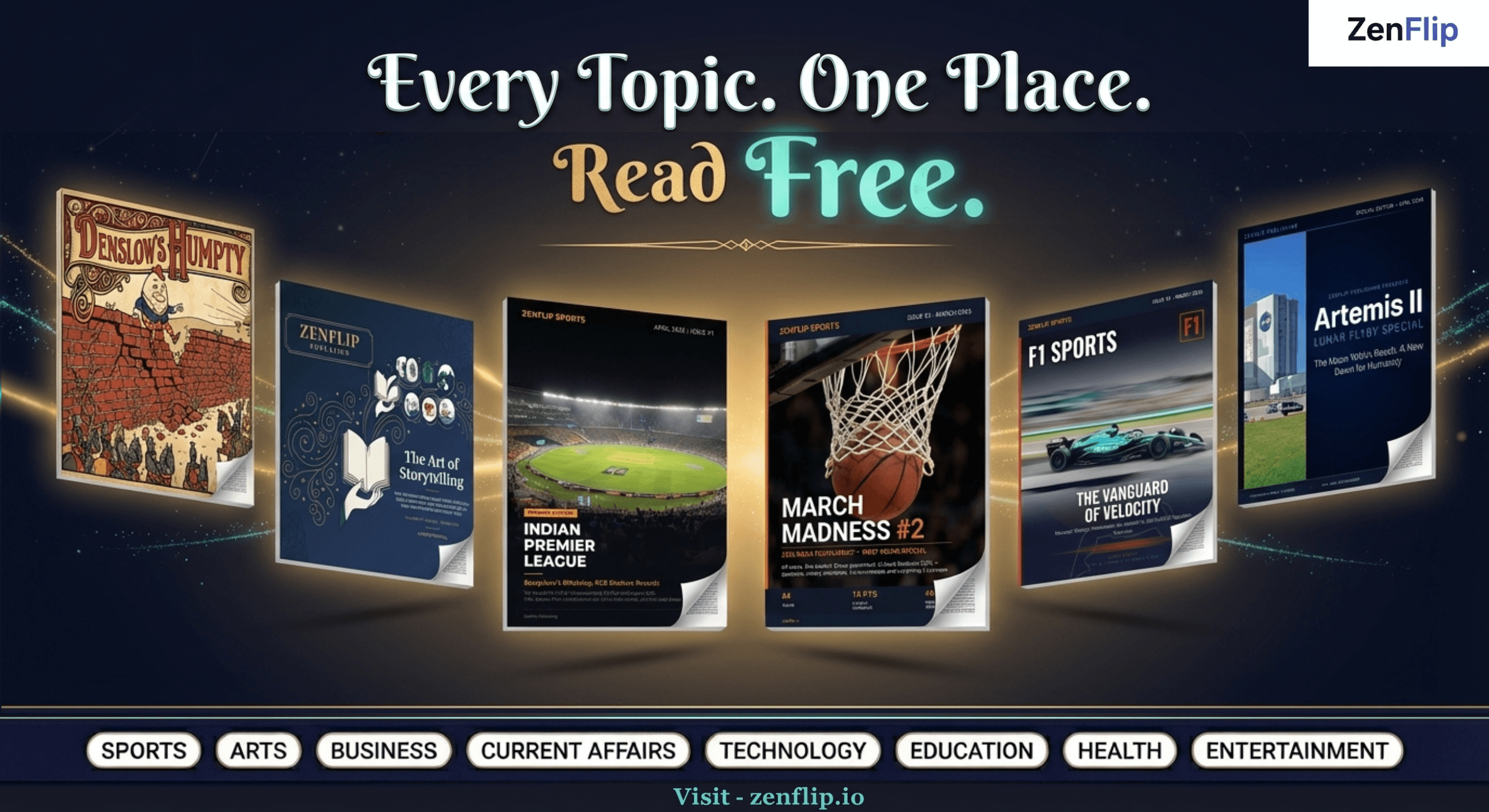
Looking for more insights on digital publishing, accessibility, sports, technology and more? The ZenFlip Library has you covered. Browse our full collection of free interactive magazines.
Every topic. One place. Read free at ZenFlip | Library
Frequently Asked Questions
What are accessible digital flipbooks for education?
Accessible digital flipbooks for education are interactive publications - built from PDF documents - that include features enabling all students to engage with content regardless of ability or device. These features include text-to-speech, screen reader support, dyslexia-friendly reading modes, and mobile-responsive output.
Why do educational institutions need WCAG compliant educational materials?
WCAG 2.2 AA compliance ensures that digital content is accessible to students using assistive technologies including screen readers, text-to-speech tools, and keyboard navigation. Educational institutions have a legal and ethical responsibility to make their published materials accessible to every student.
What types of documents can schools publish as digital flipbooks?
Course materials, syllabi, student handbooks, admissions brochures, campus guides, research publications, newsletters, and annual reports all convert well to the digital flipbook format.
How does text-to-speech support students in education?
Text-to-speech with word highlighting allows students who process information more effectively through audio - including students with dyslexia or reading differences - to listen to course materials as they follow along. This makes dense course packs and handbooks more accessible for a wider range of learners.
Does ZenFlip include accessibility features on the free plan?
Yes. ZenFlip includes WCAG 2.2 AA compliance, text-to-speech with word highlighting, screen reader support, Microsoft ImmersiveReader, dyslexia support, and mobile-responsive output on all plans including the free tier, with no configuration required.
Can educational institutions embed flipbooks on their own websites?
Yes. ZenFlip provides iframe embed code for every publication, allowing institutions to embed course materials, prospectuses, and handbooks directly on their own website or virtual learning environment.
Hashtags
#AccessibleEducation #DigitalFlipbooks #WCAGCompliant #EdTech2026 #InclusivePublishing #ZenFlip #DigitalPublishing #AccessibleLearning #HigherEducation #InteractiveLearning
Turn your next PDF into a flipbook — free
No credit card, no watermarks, no time limits. 5 publications on the free plan — ready in under 2 minutes.