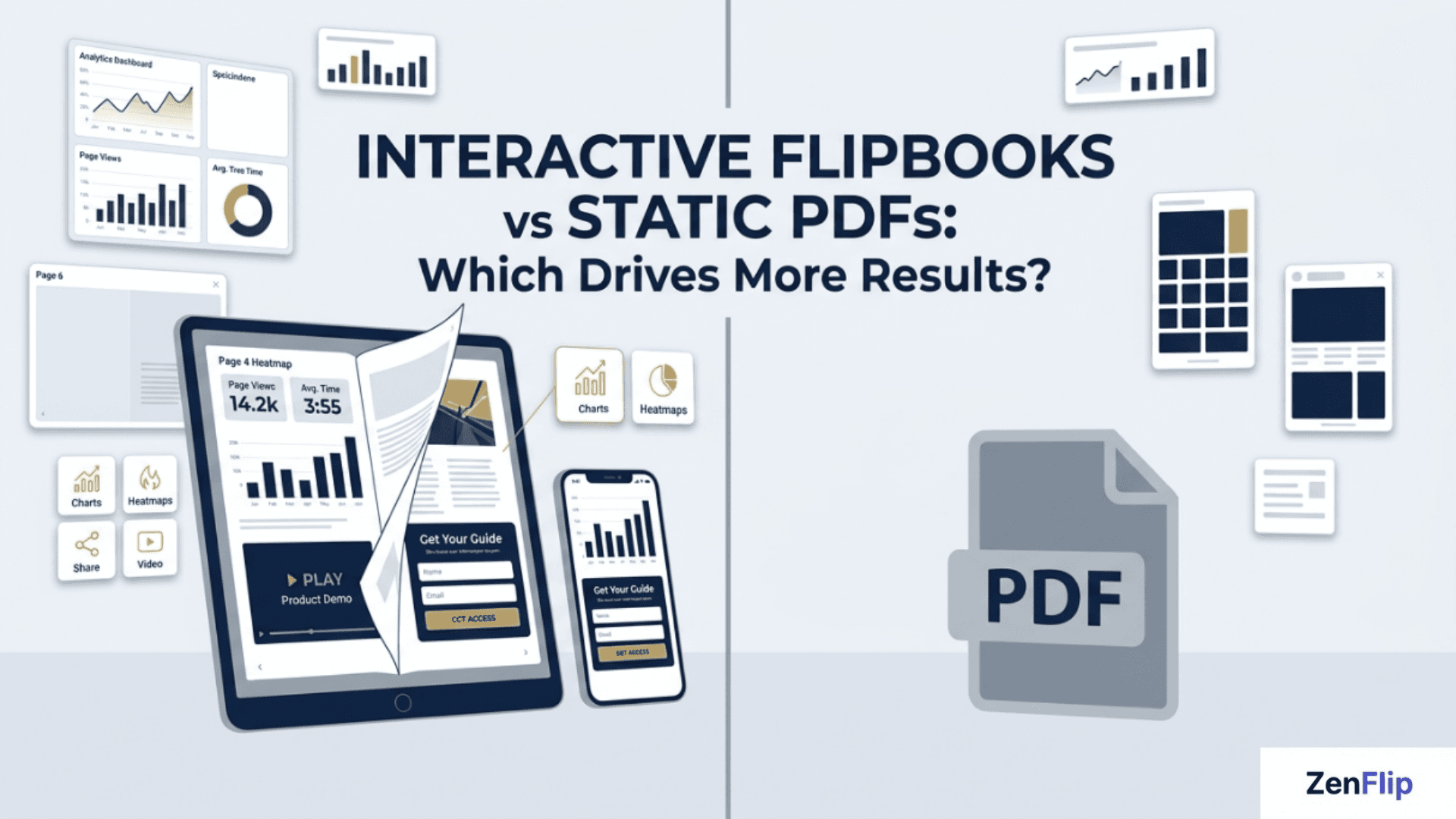
Interactive Flipbooks vs Static PDFs: Which Drives More Results?
Discover how interactive flipbooks compare to static PDFs across engagement, mobile experience, analytics, and lead generation - and why digital publishers are making the switch in 2026.
Written By: Jagadish C U (Founder Of Zentrovia Solutions)
Why Interactive Flipbooks are Replacing Static PDF
The way audiences consume digital content has evolved rapidly. In digital publishing 2026, brands and content teams are re-examining their document strategy - specifically whether static PDFs still serve their goals or whether interactive flipbooks offer a measurable advantage. Zenflip, a purpose-built interactive publishing platform, positions flipbooks as the modern standard for publishers who want visibility, engagement, and results.
What Are Interactive Flipbooks?
Interactive flipbooks are HTML5-based digital publications that recreate the page-turn experience of a physical document while supporting dynamic, web-native features. Unlike a traditional PDF, a flipbook rendered through a platform like Zenflip can host embedded videos, clickable links, audio tracks, and lead generation forms - all accessible directly in a browser, without requiring a download.
Key Features That Set Flipbooks Apart
Smooth animated page-turn navigation
Embedded multimedia - video, audio, and hyperlinks
Mobile-responsive flipbooks that adapt to any screen size automatically
Real-time reader behavior analysis and page-level analytics
Shareable browser links - no download required
Lead generation forms embedded directly within the publication
The Limitations of Static PDFs in 2026
Static PDFs were engineered for print output - and that heritage creates friction in a mobile-first world. On smartphones and tablets, multi-column PDF layouts often require readers to pinch, zoom, and scroll horizontally to follow the content. Google's mobile-first indexing means the mobile version of your content is the primary version Google crawls and indexes. Combined with Core Web Vitals - confirmed Google ranking signals that measure real page experience - a poor mobile experience can directly affect search visibility, making this a real publishing risk, not just a cosmetic one.
Beyond mobile, static PDFs offer almost no analytical value. Once a file is downloaded, publishers lose all visibility into how it is consumed. There is no way to know which pages were read, which sections were skipped, or where a reader's attention dropped. Without that data, content optimization is largely guesswork.
Comparing Content Engagement Metrics
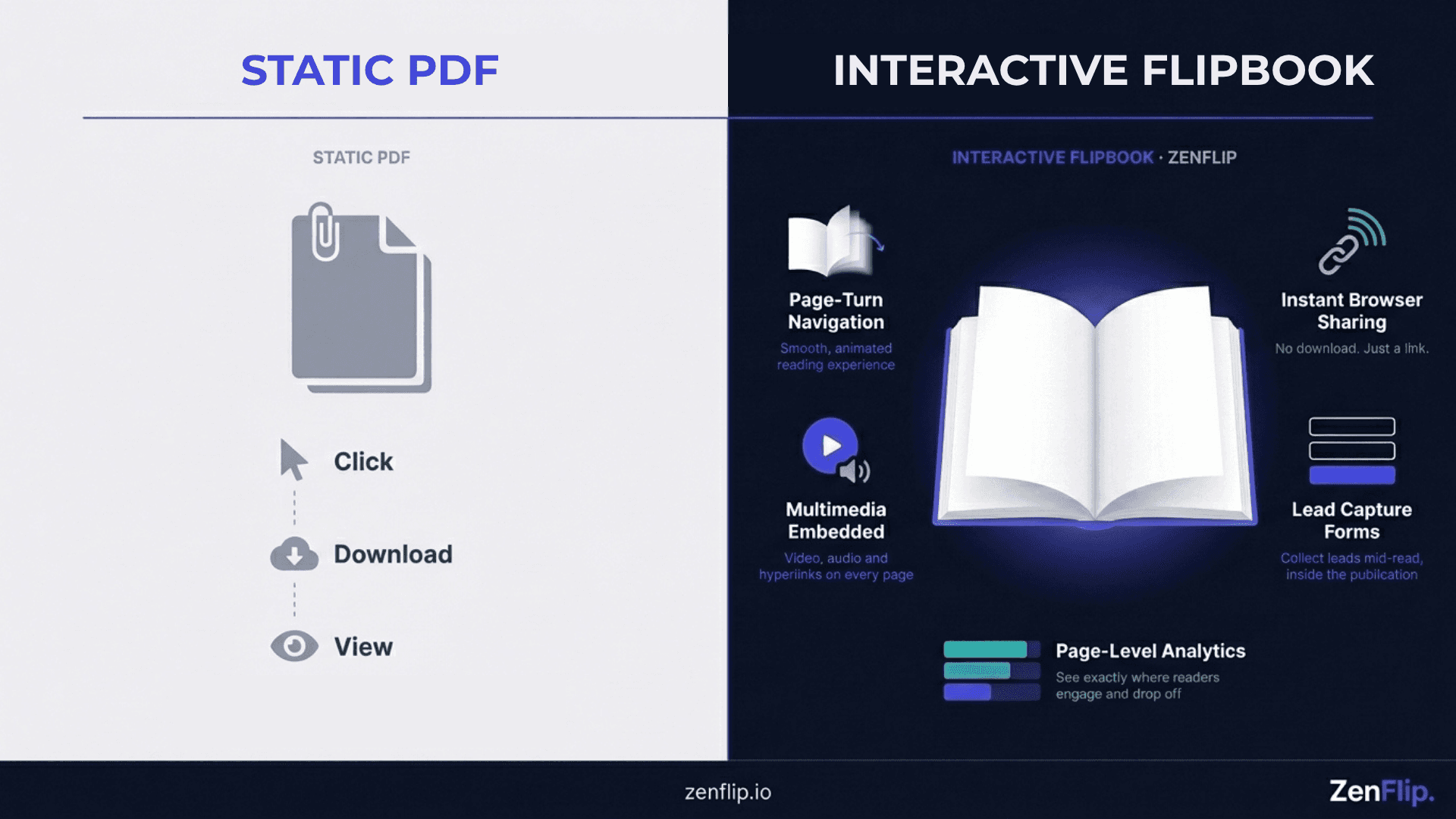
When evaluating content engagement metrics side by side, the structural gap between the two formats is stark. A PDF being opened or downloaded is the full extent of what most publishers can track. Interactive flipbooks, by contrast, surface granular content engagement metrics - including time-on-page per spread, scroll depth, link click rates, and re-read frequency - giving publishers a live picture of how their audience is engaging.
Page-Level Analytics and Reader Behavior Analysis
Page-level analytics allow publishers to identify precisely which spreads generate the most attention and which are consistently skipped. Reader behavior analysis at this level enables editorial and marketing teams to improve content structure, adjust calls to action, and allocate production resources to the sections that actually move readers to act. Zenflip surfaces these insights through its built-in analytics dashboard, making data-driven publishing accessible without third-party integrations. Read: How to Identify and Fix Reader Drop-Off Points in 2026: A Strategic Guide to Page-Level Analytics and Content Performance
Interactive Content ROI and Lead Generation
Interactive content ROI extends well beyond engagement time. Flipbooks function as active lead generation tools - embedding opt-in forms, gated content gates, and CTA buttons at contextually relevant points within the publication. A reader who reaches a product spread can be served a targeted form at exactly the right moment. Once a PDF is downloaded, that opportunity is lost entirely - there is no mechanism for a static document to respond to reader behavior in real time. Read: White Label Content Monetization: How to Own Your Brand and Drive Digital Publishing Revenue
PDF to HTML Conversion and Digital Document Accessibility
The transition from static to interactive does not require a complete content rebuild. PDF to HTML conversion tools - including those built into Zenflip - allow publishers to upload existing PDFs and transform them into browser-native flipbooks, preserving layouts while adding interactivity. This means legacy content libraries can be upgraded without starting from scratch.
Digital document accessibility is another area where HTML-based flipbooks hold a structural advantage. Web-native publications can be built or configured to conform with WCAG (Web Content Accessibility Guidelines) standards - including screen reader compatibility and keyboard navigation - more readily than fixed-layout PDF documents. This broadens the potential audience and supports inclusion-first publishing practices. Read: Your Complete Guide to Accessible Digital Publications in 2026
Why Zenflip Is the Platform for Digital Publishing 2026
Zenflip is built specifically for publishers who require more than a static file share. The platform handles PDF to HTML conversion, hosts the resulting flipbook on a shareable branded link, and provides page-level analytics and reader behavior analysis through a centralised dashboard. Teams can embed lead generation forms, multimedia, and interactive elements - and monitor content engagement metrics in real time - without requiring development resources.
For organizations weighing interactive content ROI against the status quo, Zenflip provides a measurable, accessible path from static PDFs to high-performance digital publications. It is a leading interactive publishing platform helping brands and publishers make the switch from static documents to engaging, analytics-driven flipbooks. Read : ZenFlip | Features
The Verdict - Interactive Flipbooks Drive More Results
When measured against 2026 audience expectations and publishing standards, interactive flipbooks outperform static PDFs across every dimension that matters - mobile experience, reader behavior analysis, lead generation capability, content engagement metrics, and digital document accessibility. For publishers serious about results, the shift from static to interactive is no longer a future consideration.
Platforms like Zenflip make that shift practical and immediate. If your content strategy still relies on static PDFs, the question is not whether to switch - it is how much engagement you are leaving behind every day you wait. Watch: How to Publish Your First Flipbook on ZenFlip | PDF to Flipbook Tutorial
Explore More on ZenFlip
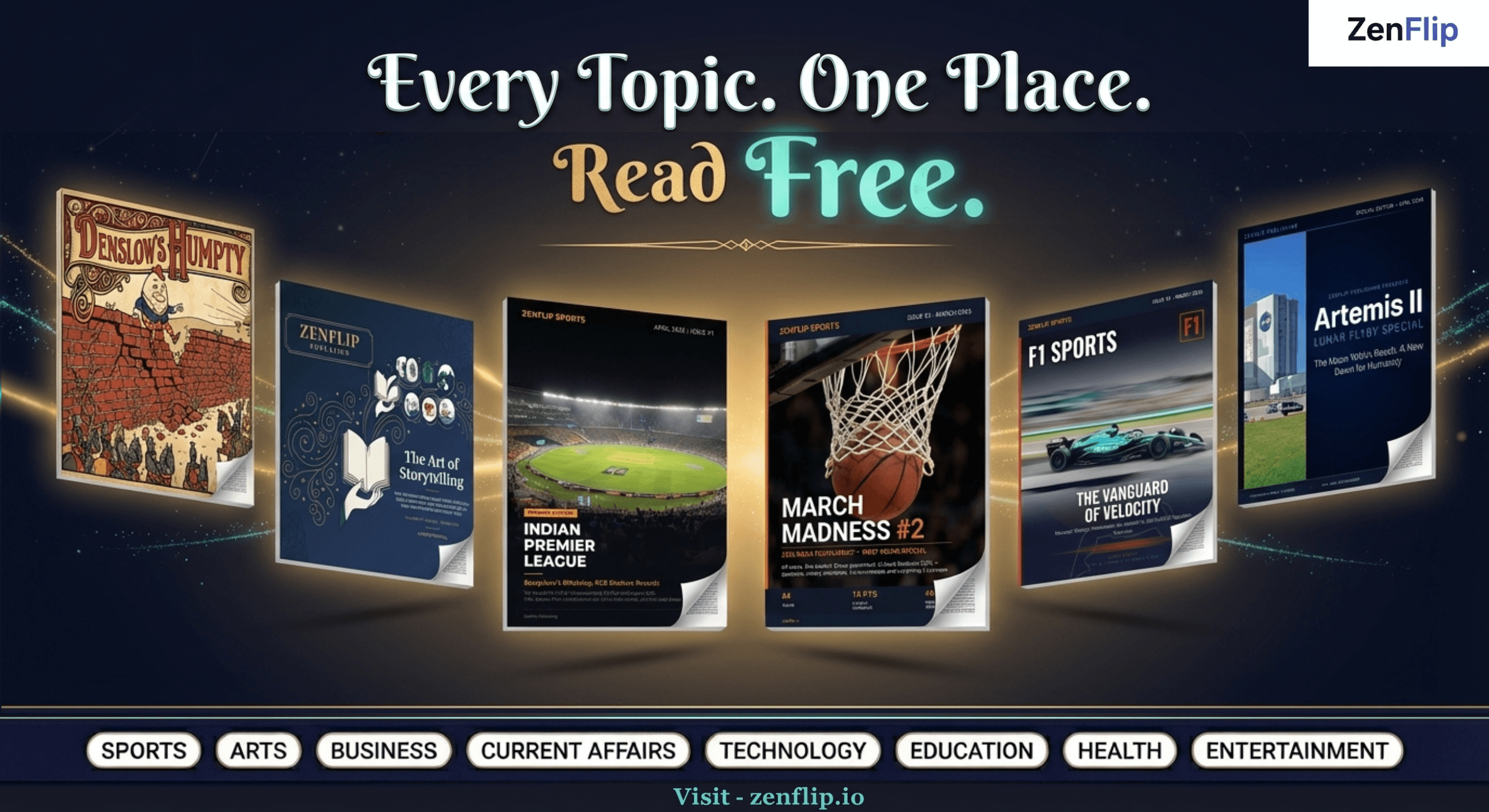
Looking for more insights on digital publishing, accessibility, sports, technology and more? The ZenFlip Library has you covered. Browse our full collection of free interactive magazines.
Every topic. One place. Read free at ZenFlip | Library
Frequently Asked Questions:
1. What is an interactive flipbook?
An interactive flipbook is an browser-based digital publication that simulates the page-turn experience of a physical document while supporting dynamic features such as embedded video, clickable hyperlinks, audio, and lead capture forms - all accessible in a web browser without a file download.
2. Can I convert an existing PDF into a flipbook?
Yes. Zenflip - allows you to upload an existing PDF and publish it as an interactive, browser-based flipbook, preserving your layout while enabling interactivity and analytics.
3. Are flipbooks mobile-friendly?
Yes. browswer based flipbooks are built to be responsive, automatically reflowing content to fit the screen of any device - smartphone, tablet, or desktop - without requiring the reader to zoom or scroll horizontally. Static PDFs, by contrast, use fixed layouts that are frequently difficult to read on small screens.
4. Do flipbooks support analytics?
Yes. Interactive flipbooks support page-level analytics including time-on-page, scroll depth, click-through rates, and reader drop-off points. This data enables publishers to understand how their audience engages with content and where improvements are needed.
5. Are flipbooks better for SEO than PDFs?
Browser-based flipbooks are generally more SEO-compatible than static PDFs. Search engines can index HTML content more effectively than PDF text in many cases, and browser-based flipbooks support faster load times and better Core Web Vitals scores.
6. Can I embed videos in a flipbook?
Yes. Interactive flipbooks built on HTML5 support embedded multimedia including video players, audio clips, animated elements, and hyperlinks - none of which are reliably supported in a standard static PDF, as multimedia playback depends on the reader application used and is unavailable in most browser-based PDF viewers.
7. Are flipbooks accessible to users with disabilities?
HTML5-based flipbooks can be built or configured to conform with WCAG (Web Content Accessibility Guidelines) standards, supporting features such as screen reader compatibility and keyboard navigation. Fixed-layout PDFs present more structural barriers to accessibility compliance, though tagged PDFs can also achieve WCAG conformance with proper authoring.
8. Do readers need to download anything to view a flipbook?
No. Interactive Flipbooks are browser-based publications accessed via a shared URL. Readers open them directly in any modern web browser on any device - no download, plug-in, or app installation required.
#InteractiveFlipbooks #DigitalPublishing #ContentMarketing #FlipbookMarketing #StaticPDF #ContentEngagement #LeadGeneration #MobileContent #DigitalDocuments #Zenflip
Turn your next PDF into a flipbook — free
No credit card, no watermarks, no time limits. 5 publications on the free plan — ready in under 2 minutes.